Landscape Choreographies
Ecologies of the Social
The project examines landscape choreographies as a historically specific development of site specificity (Hunter/Turner 2025). It is based on the observation that choreographies in and with landscape have gained particular virulence in the European dance scene since the COVID-19 pandemic. Due to health, production and cultural policy requirements, creations had to be developed outside built structures, such as theatres. At the same time, the urgent need for ecological responsibility has become ever more pressing. Since then, various interventions in public spaces have combined social and ecological themes and concerns with participatory landscape formats.
According to the project’s assumption, they are looking for ways to bring the perception of nature, landscape and (urban) surroundings into physical resonance in order to simultaneously rewrite them, set them in motion and bring about change. As ‘social choreographies’, they raise ecological awareness and experiment with new forms of coexistence.
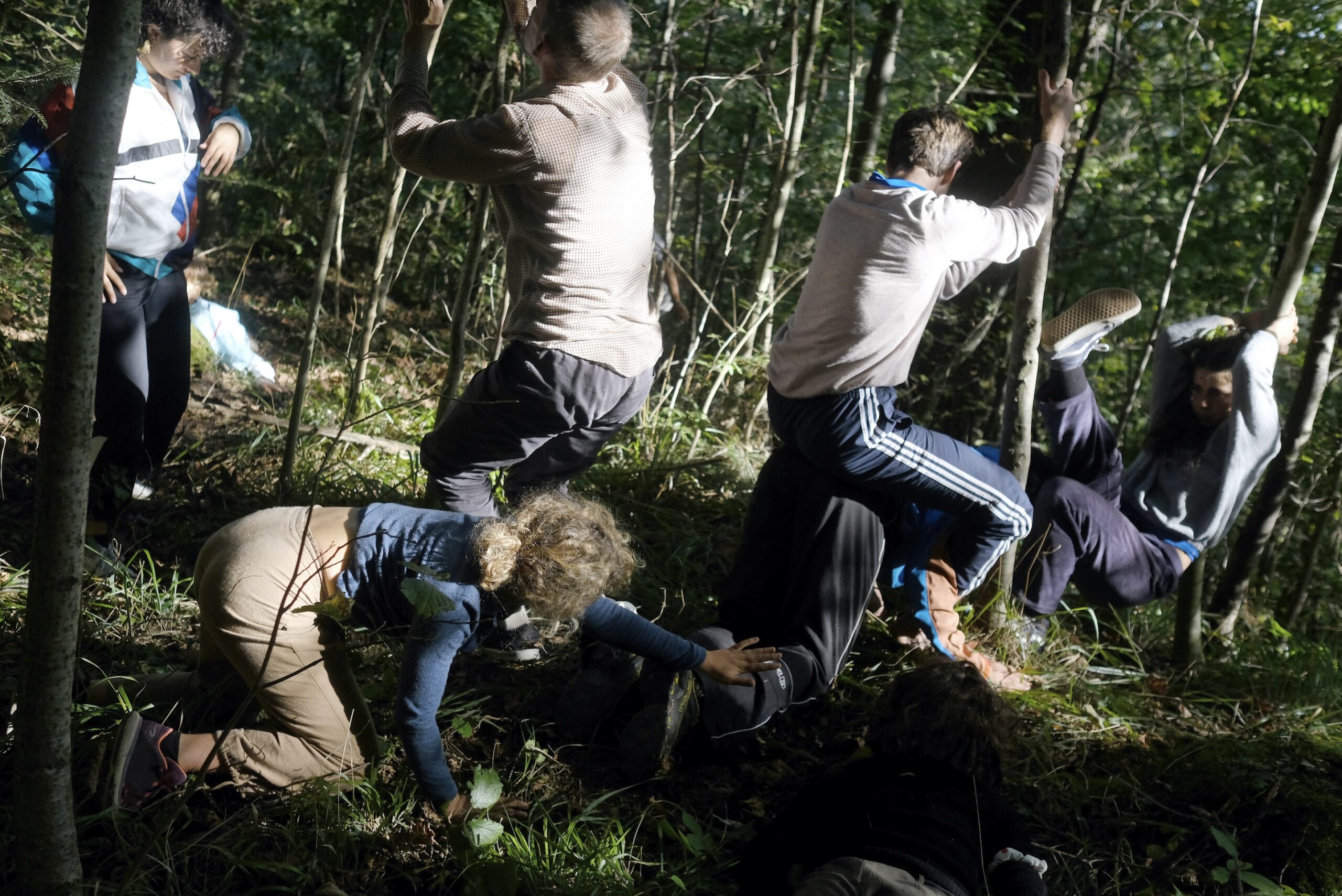
The project conceptualizes the artistic works as landscape choreographies in which ‘landscape’ is performatively produced through the relation of human and non-human bodies in motion (Ingold 2021). ‘Landscape’ is understood as a physical space and habitat which becomes an object of contemplation, reflection and immersion within the artistic installation. Landscape choreographies can take different forms: microscopic explorations of one’s own body in the forest, as in the processual and immersive works of artist Gregory Stauffer (Stauffer 2024). Or technically complex and theatrically designed dispositives in outdoor spaces, such as in WASTEland by Claudia Bosse (2025) or Paysages partagés by Rimini Protokoll and the Théâtre de Vidy-Lausanne (2023). Landscape choreographies often incorporate participatory elements such as guided walks, score-based settings, sensory trails or mediated interactions with ‘nature’ (e.g. through augmented reality). In this way, they evoke specific choreographic – spatial and social – experiences of landscapes.
The project is part of the SNSF research project Social Choreographies (2024–2028) at the Institute for Theatre Studies.
Choreographies of Precariousness
Climate Change and Bodily Experience
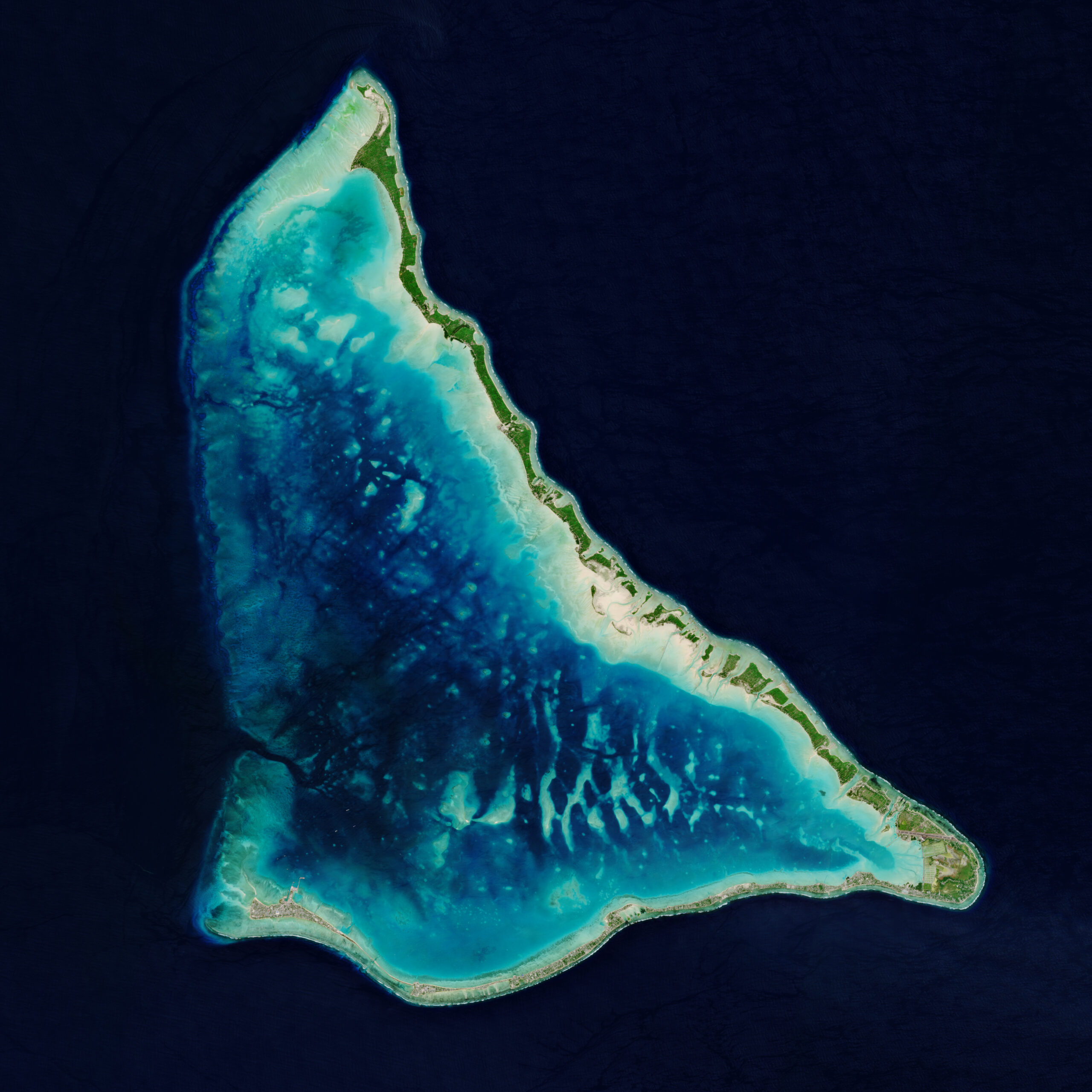
Climate change is bringing South Pacific Islands into the focus of global attention. Due to their precarious geographical position (their low elevation above sea level), climatic changes pose a threat to the livelihoods of their inhabitants.
Against this backdrop, the PhD project Choreographies of Precariousness. Climate Change and Bodily Experience (2024–2028) explores the embodied experience of the climate crisis by working with South Pacific dance practitioners in Aotearoa/New Zealand, Tungaru/Kiribati and Tuvalu.
Dancers are particularly trained and skilled in perceiving their body, their surrounding space, and the spatial relation between human and geographical bodies (such as atolls, islands, islets, lagoons, sea floors and beaches). For this reason, they are best suited to understand how climate change is sensed, felt, and experienced on a corporeal, everyday level.