Arctic Auditories – Hydrospheres in the High North
Arctic Auditories – Hydrospheres in the High North (NFR 325506, 2021-25) is an interdisciplinary project based in feminist methodologies. It engages scholarship and methods from sound arts, human geography and applied ethnomusicology to develop strategies for understanding environmental change through sound.
Focusing on water environments, the ultimate aim of the project is to deliver innovative inter-disciplinary, empowering, and democratic listening strategies to help individuals and society more broadly, cultivate radical imaginations of futures beyond environmental anxiety.
Further Information about the project on the project website.

Listening to Inuit Songs, Sounds and Voices through the Museum
Non-Inuit approaches to Inuit songs are shaped by a Western understanding of music and exotic fantasies of the Inuit and the Arctic. From an Inuit perspective, however, traditional songs are not just music – there is not even an equivalent term in Inuktitut – but rather historical accounts, stories of life and everyday experiences, some with educational purposes, as well as traditional ecological knowledge. Songs and vocal games such as Katajjaq are also a form of interaction between the singer and the Arctic environment – human, animal, and more-than-human.
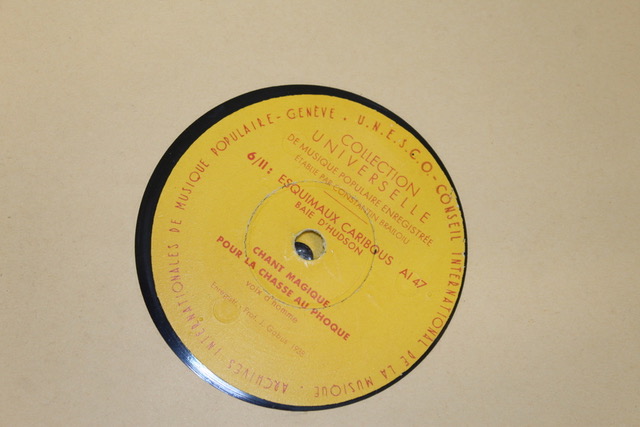
Using the example of an ethnographic Inuit song and sound archive, the so-called “Archives Sonores Inuit” (1938/1939), located in the Musée d’Ethnographie de Neuchâtel, this interdisciplinary dissertation project addresses the following question: To what extent do colonial logics, forms of knowledge production, and (sonic) imaginations of Inuit and the Arctic inform practices of preservation, handling, curation, and/or mediation of Inuit songs, sounds, and voices in Switzerland, especially in museums as so-called “contact zones”?