Territorial Aesthetics: Genoa’s Visual Politics across Mediterranean Ecologies, 1625–1655
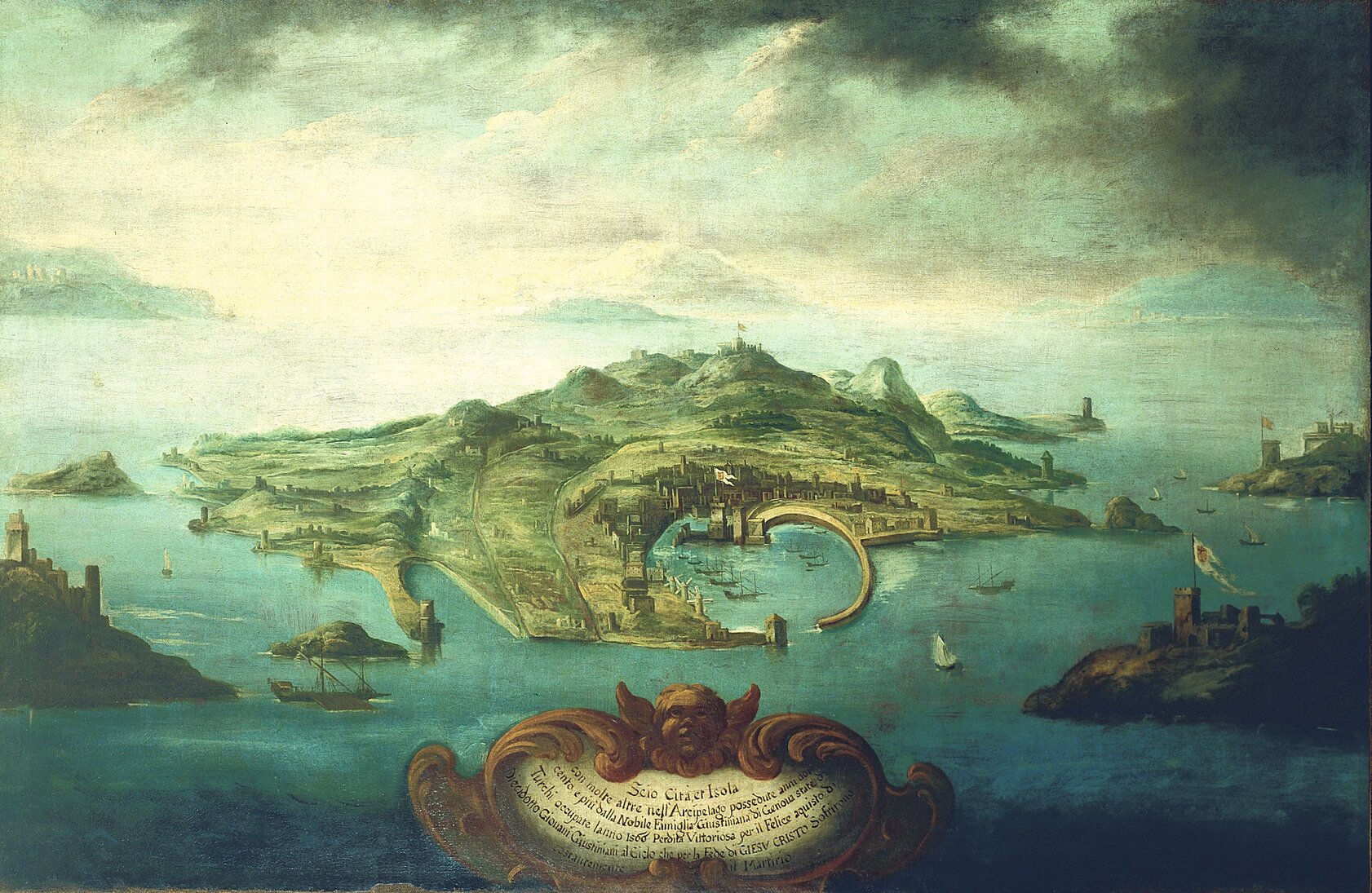
The project examines the emergence of territory as a political, devotional, and ecological category within early modern aesthetic discourses. It investigates how territories take shape in images and how, in turn, images participate in shaping terrestrial, aquatic, and coastal environments. It traces the visual presence of the territorial in paintings, sculptures, and prints—at times as a model of a city, a coastal view, a personification of a real or imagined land, or a marginal detail in an altarpiece. Focusing less on what a territory represents than on how it produces meaning through form, the study explores how artists and patrons articulated an aesthetic discourse of territory.
The project centers on the visual and material culture of the Republic of Genoa between the 1620s and 1650s, across a wide transregional horizon—from Liguria, Corsica, and Southern Italy to the Iberian Atlantic, North Africa, and the Aegean Sea. Offering a more nuanced and complicating perspective on Genoa’s art history at a moment of profound transformation, the study redefines territory as an aesthetic operation: an unstable, generative process through which images become sites of resonance, interference, and diffraction between geopolitics and geo-aesthetics.
Ecology & Community from an architectural history perspective: Climate change, ecology, and the (built) environment
Building as a cultural practice is closely intertwined with issues of ecology and community. Through its buildings, humankind has always shaped the environment, changed landscapes, influenced ecosystems and natural spaces, responded to the climate, and at the same time contributed to its change. The architectural-historical examination of these issues, i.e., the analysis of history and its historiography, can help to open up new perspectives on current questions relating to climate change, ecology, and the (built) environment, and to develop possible solutions.
Petroleum modernity in the Arab world
Architecture, urban planning, and urban visual and material culture in the context of petroleum industrialization are a key research focus of the Department of Architectural History and Preservation at the Institute of Art History.
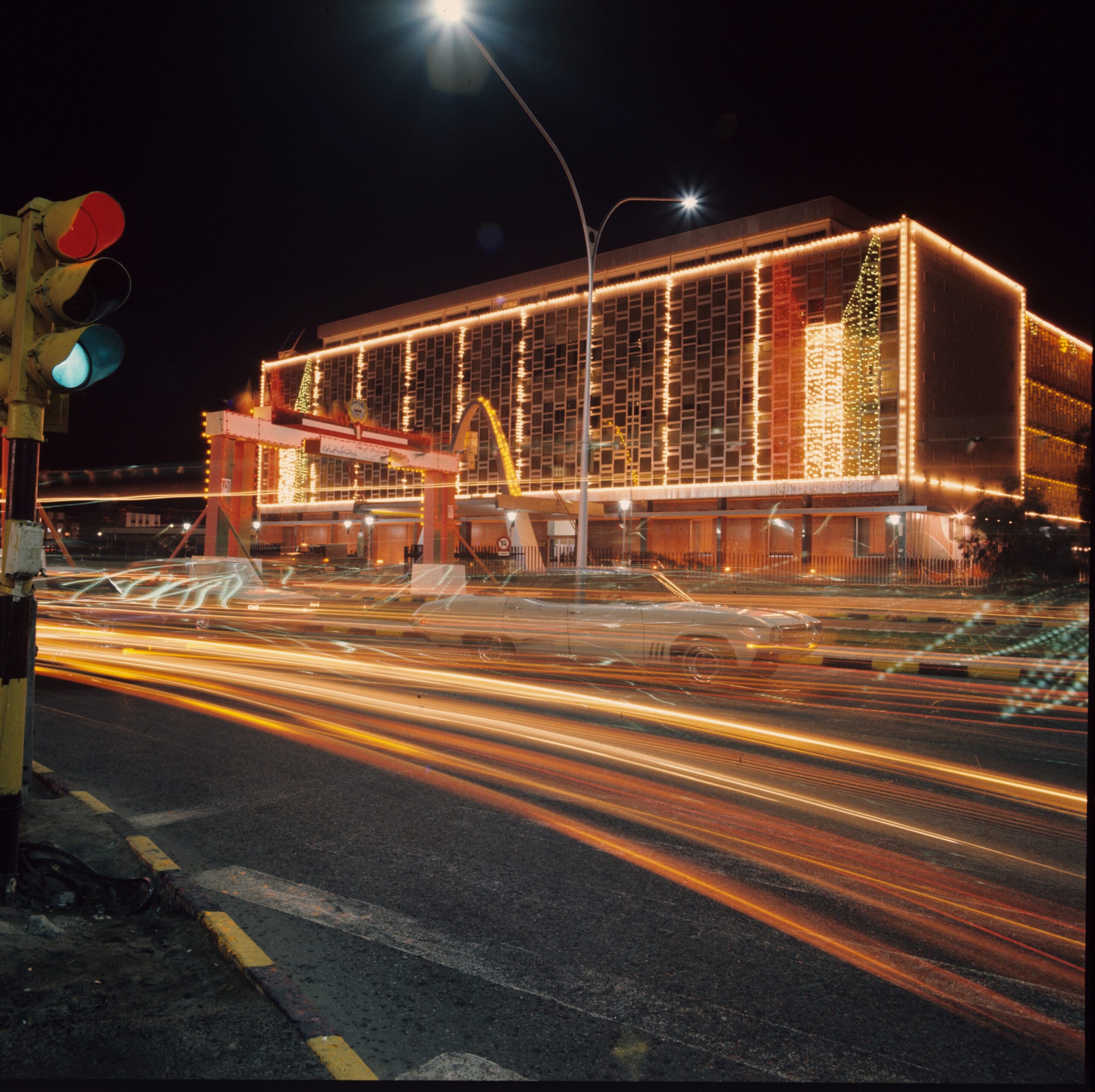
In her monograph, resulting from several years of archival and field research on petroleum modernity on the Arabian Peninsula “Iridescent Kuwait: Petro-Modernity and Urban Visual Culture since the Mid-Twentieth Century” (2022), Laura Hindelang traces the extent to which historical notions of modernity in the MENA region were closely intertwined with the extraction and consumption of fossil fuels, and how the fascination with fossil-fuel-based lifestyles continues to pose a cultural obstacle to the implementation of the energy transition. This research shows that art and architectural history can make a significant contribution to identifying obstacles to climate change. The publication can be found here.
Energy and infrastructure landscapes
Technical infrastructures – transportation, energy, and communication systems – are not only a central foundation of modern societies and economic systems, they also have a decisive influence on the environment and climate. Various projects at the Institute of Art History, Department of Architectural History and Monument Preservation, deal with the history and development of energy landscapes and infrastructure systems, their effects on the (built) environment, and their social and ecological implications.
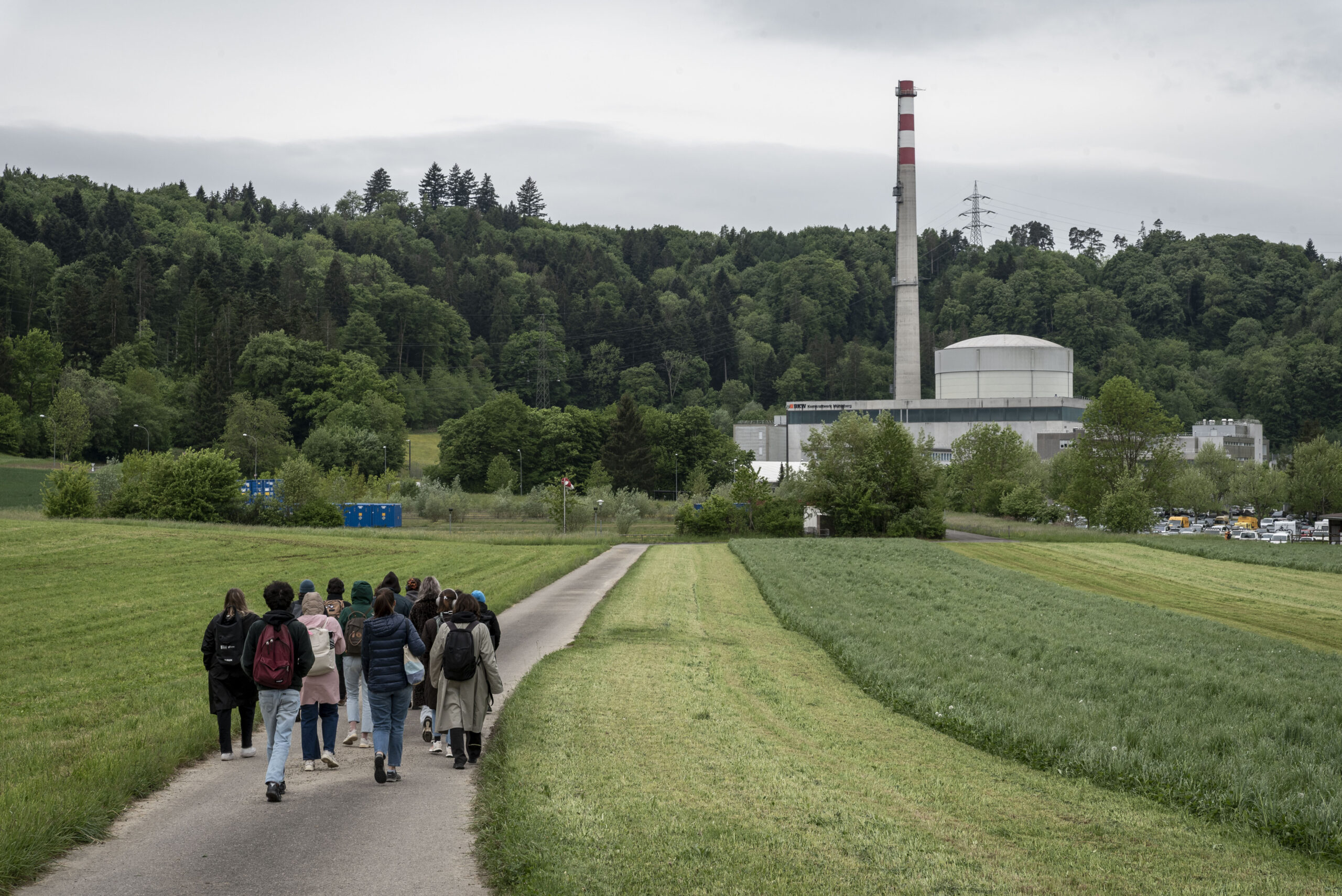
In 2025, an international conference on the architectural heritage of the nuclear age was held, which also examined the handling of nuclear power plants in Switzerland. This led to the formation of the International Nuclear Cultural Heritage Working Group: Nuclear Cultural Heritage – International Conference and Working Group.
Radio SRF and Radio Raabe reported on the Nuclear Cultural Heritage Conference at the University of Bern in two broadcasts.
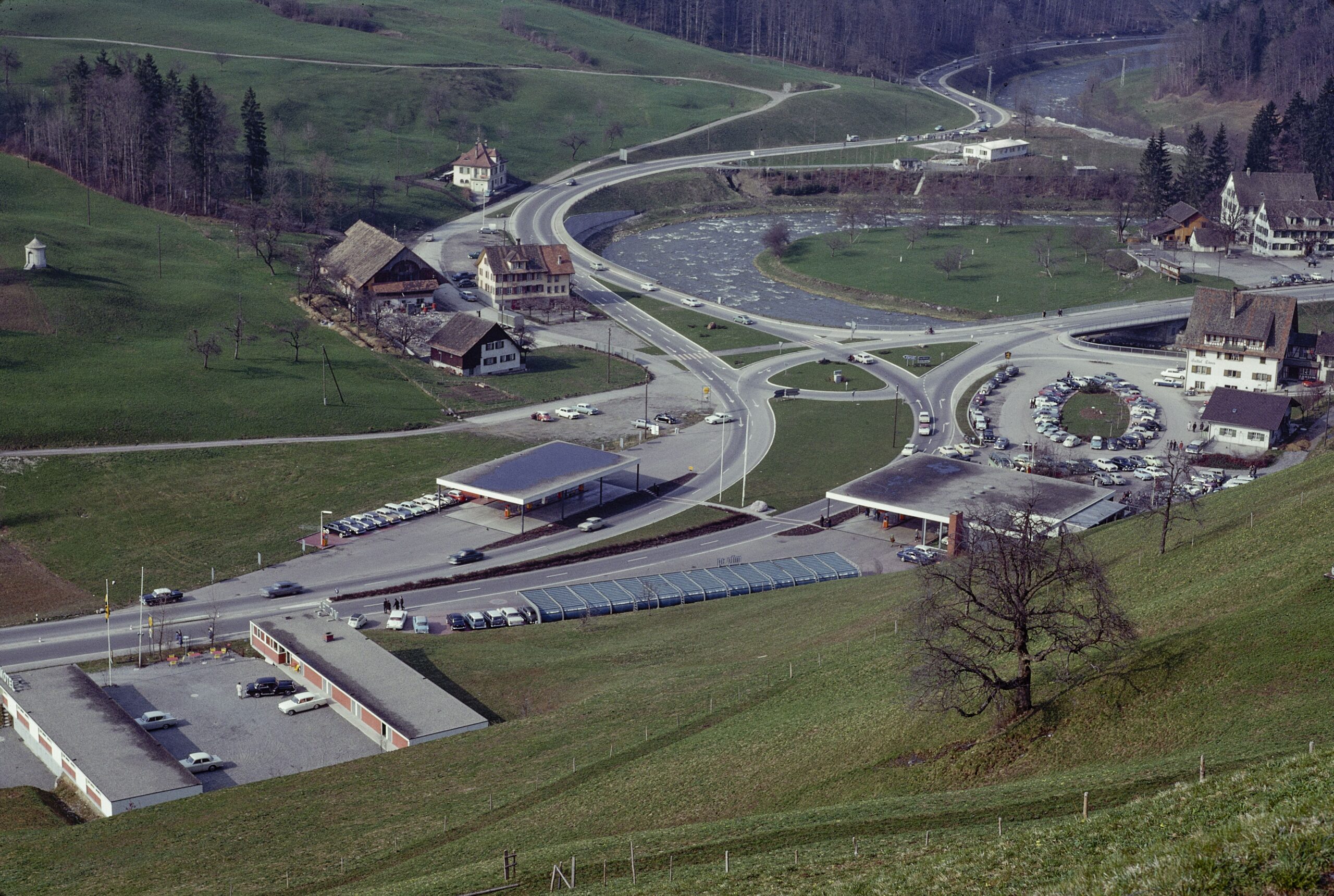
In addition, a doctoral project at the department has been examining the building culture of motorized private transport in Switzerland since 2023. Anne-Catherine Schröter is investigating the various types of buildings and infrastructure that developed in connection with motorization during the 20th century—from gas stations and parking garages to rest stops and highways—and is also highlighting the landscape and spatial impacts of this infrastructure network.